
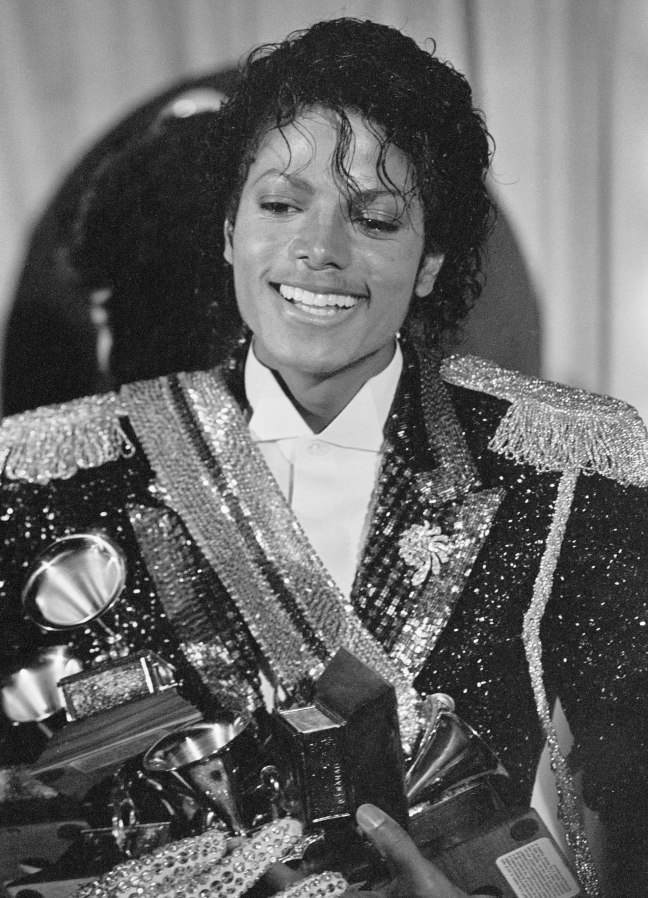
People who know me can already guess that I haven’t seen Michael (dir. Antonia Fuqua, 2026). Michael is—or at least, has been promoted as— an event film. And I have a pretty strong aversion to bandwagons and event films (except for those taking place in a galaxy far, far away).
You won’t see me at the theatres watching Michael because I want to watch it in my own time. I need to be able to see it free from the pressures of having an immediate reaction. I crave the freedom to collect my thoughts amidst the lingering of memory and impression. For me, there’s simply no rushing this.
But since before the trailer dropped, I have anticipated reading the words of James Howard Hill Jr on, what James Baldwin called, “the Michael Jackson Cacophony.” The phrase serves as the title to Hill’s forthcoming book, but the subtitle, “Antiblackness, Secularism, and Popular Culture (1963–1988)”, is as intriguing to me as the homage. Those decades cover generations and a complicated drama. And if you’ve read his pen or seen his images, then you know he is well-poised to craftfully frame this event. His are not rushed thoughts. He has taken time.
Religion Dispatches just published a piece by Hill: “Is *Michael* Bad?: Religion, race, and the horrors of American public consumption.” There is so much to appreciate in and throughout it. I hope you’ll read it.
Insofar as both Hill and I are scholars of religion, one might deduce our dismay at the lack of coverage on the Jackson family’s identification with Jehovah’s Witnesses. But one of the conversations to be had is what that signifies for the Jackson family, and dare I say, for us. “Jehovah’s Witnesses” are not just a sign of what the Jacksons believed. It is an indicator of challenges they were facing. Hill writes, the Jacksons “responded to the terrors of Jim Crow by seeking meaning, community, and comfort” through the Witnesses.
As Black Texans of that latter arc in the King of Pop’s reign, this is all too familiar. I imagine Hill and I both remember Selena Quintanilla Perez, the Queen of Tejano Music whose forecasted English-language crossover success came posthumously following her murder in 1995. Rumor had it that Selena died because her family refused a vital blood transfusion, a Jehovah’s Witnesses custom.
And of course, there is the mysterious 2016 death of Prince. Speculations has linked a death-dealing dose of fentanyl to his refusal of a pain-relieving hip surgery. Here again the rumor mill invokes the same custom.
The speculation, the rumors, the event….we rush to make sense of these moments at our own peril.
What I appreciate about Hill’s work here is his refusal to stay at the spectacle of religio-racial identity. He instead leads us in considering our compulsion to watch and look askance at very human moments. This is what I find helpful about his redescription of this drama in terms of horror. “Horror concerns what remains after violence has already altered the world beyond repair,” he writes.
While I do not know whether Michael works, I do remember many events. The ones that come easy are the music video premieres like Remember the Time, the ones that made us ask, “Did you see that?”.
That line immediately brought to mind another common plight among the named slain—diaspora. Diaspora is a horrifying condition at cultural scale. It is the situation that results from a world structured to remind you that you cannot go to a place called “home.” It is no longer for the likes of you. Those who know my work can trace my interested in looking at the “post-trauma poetics” (to quote Houston Baker) that diasporic figures like Alex Haley and Joel Augustus Rogers craft in response to horror—identifiable roots and the “scripturalectics” of resilience. The event film similarly promises an antidote to horror. Whether it works remains, as it always has, in the minds of the people.
But the memory that’s deepest was a preschool friend’s birthday party. The friend’s parents hired a Michael Jackson impersonator donned in the now-iconic red jacket. The party went down in 1987–so post-Thriller but pre-Bad. And while we all knew this wasn’t the real Michael, the act gave us something to work with.
When I watch Michael, what I will watch for is not what the film got right but what it gives people to work with. Will it be enough to help audiences face the horrors before them or will it confirm what we thought we already knew? It takes time to tell.
Discover more from Sowing the Seed
Subscribe to get the latest posts sent to your email.
