
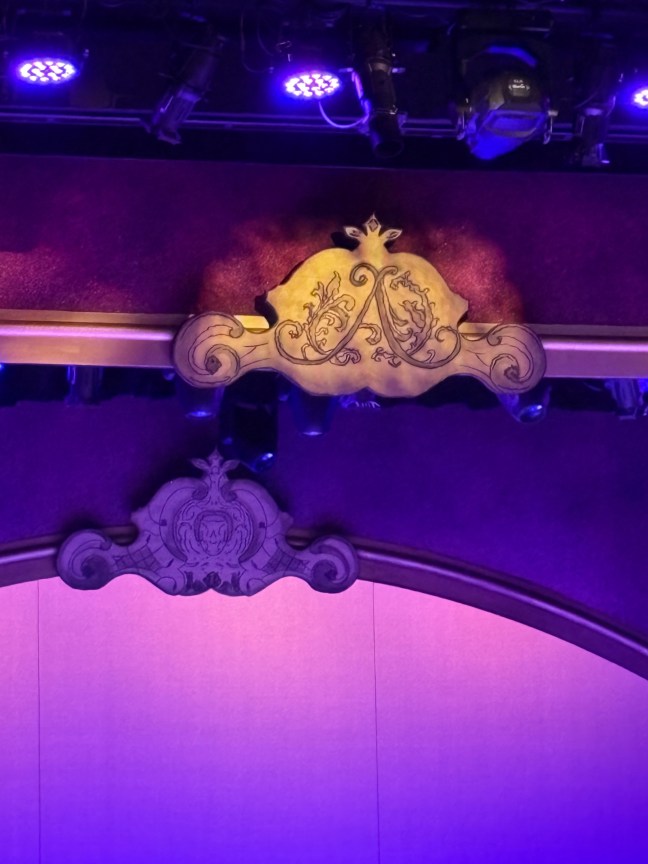
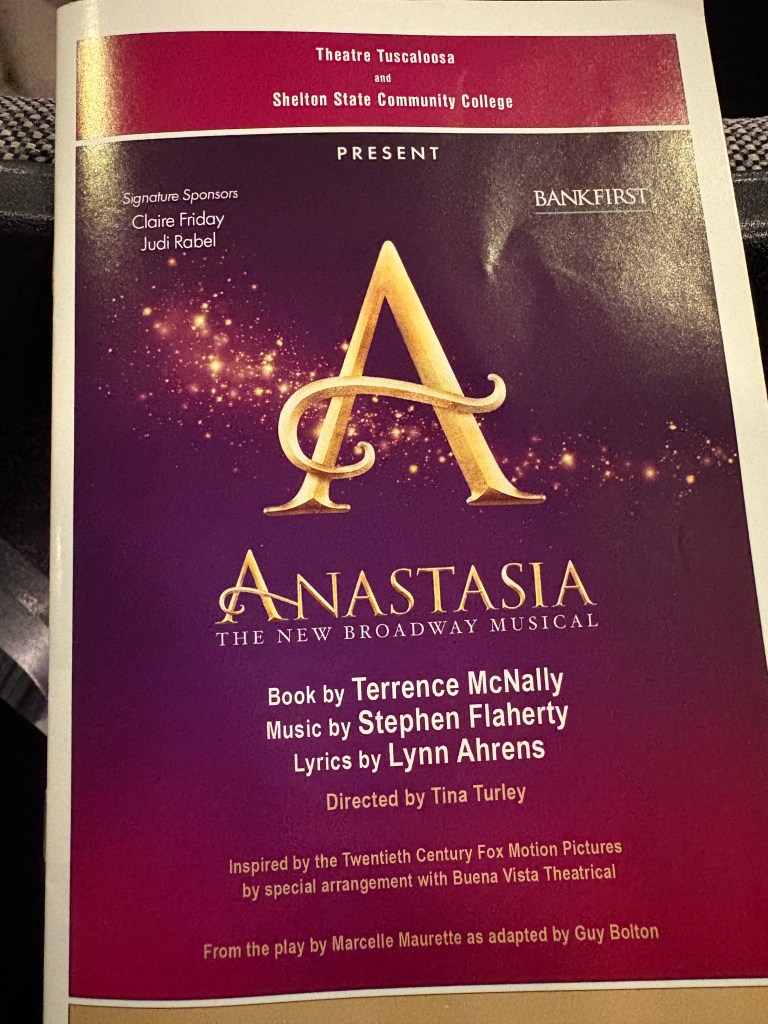
A couple of weeks ago, I checked out Theatre Tuscaloosa’s performance of Anastasia: The New Broadway Musical. Being a parent of young kids, I don’t get out to the local art scene unless Crayola’s involved. As luck would have it, my wife won some tickets and we were in for a treat! I didn’t know too much about the musical going into it, but I quickly learned that it was an adaptation of the 1997 blockbuster animated film.
Was it a faithful adaptation of the original? Honestly, I couldn’t care less. I’m pretty sure my little sister and I wore out the VHS. I was looking for something new on stage, and the musical didn’t disapoint. The pit orchetstra brought it. Vocalists were great. Dance number were fun. Emotions ranged from somber to hilarious without the show ever feeling contrived. No one was phoning it in.
I also noticed some things about religion.
Anastasia begins at the turn of the century with the Kingdom of Russia on its final leg. Through the eyes of the princess Anastasia Romanov, we see the family of Tsar Nicholas II as an idyllic portrait of European monarchy. Her picture-perfect childhood is sullied by the departure of her beloved grandmother, the Dowager Empress Maria Feodorovna, who is off to live in modern Paris. Before leaving, she gives Anastasia a music box whose song will the girl’s spirits to happier times.
A lyricless montage accelerates the timeline. Shadows from fire and war point to the violent fall of imperial St. Petersburg. The Bolkshevik Revolution has wiped away the Romanov family to make room for a new socialist republic. But rumor spreads that Anastasia survived the violent deposition. Many pretenders lay claim to the girl’s identity but none convince the Dowager Empress. One girl, an amnesiac known simply as Anya, joins a plot to scam the Empress for her fortune only to realize that she may indeed be the actual surviving Romanov.
Both the film and musical were inspired by real events, including the tale of the surviving Anastasia.
A few things stood out to me about the show in contrast to my memory of the musical.
In the cartoon, Tsar Nicholas II is advised by a shadowy soothsayer named Rasputin. Rasputin’s corruption is linked to the fall of the Romanov family. The historical events are actually a bit more complicated (and certainly not rated G). Rasputin is actually absent from the musical. As Playbill puts it.
Gone from the 1997 cartoon are the devilishly evil villain Rasputin and his sidekick, an albino bat named Bartok. Animated sorcery has been replaced with political might, and Anastasia’s new antagonist, Gleb, represents Russia’s new political regime.
Relatedly, the musical reminds audiences of the prominence of the Russian Orthodox Church. We hear about the importance of children saying their prayers. There are hints at the reading of icons. And there are subtle questions about God’s role in the monarchy and unfolding events. One might be tempted to liken the cartoon to playing up spritualism in contrast to the musical’s discussion of institutional religion, but I think this distinction actually misses a key point of the musical.
What’s it look like to really be Russian?

The musical’s second act takes place in fashionable, modern Paris. The Russian ex-pats have formed a diasporic community that has all but moved past the monarchy and has no love for socialism. They revel in their traditional dances and literary heritage, but they also embrace the innovations of French style.
What occured to me at the play is that paying attention to religion is less about charting who’s god is being worshipped and more about the vocabulary people use to narrate the changing of the times. Is Anastasia about mystical spiritualists, haunting secularism, or capitalist wonders? Yes. Then maybe we’d do well to think about religion as drama.
*PS –I kindly ask that those of you more up on Russian history, film, and theatre will correct me in the comments.
Discover more from Sowing the Seed
Subscribe to get the latest posts sent to your email.
