
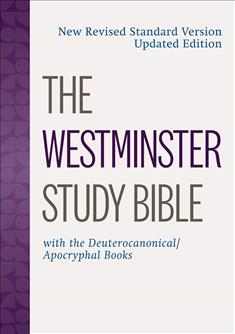
Back in 2021, I learned that Westminster John Knox Press would be producing an edition of the New Revised Standard Version-Updated Edition. The translation itself would be a collaboration between the National Council of Churches and the Society of Biblical Literature, but the study Bible would be designed for undergraduates in state schools, liberal arts colleges, and humanities programs. I was thrilled when Emerson Powery invited me to contribute critical study notes for the Letter to Philemon.
My first thought was actually a flashback to middle school Sunday School class where we discussed, “How do you even pronounce the name of this book?”.
I then locked in to the request to present notes that presume a nonsectarian audience, themes of contemporary and public interests, and historical insights into antiquity and beyond. It was an exciting challenge, especially given that the letter has one chapter.
The chapter is small but it raised a lot of questions for me that I enjoyed the chance to investigate. I worked on my own translation, as my mentors Daryl Schmidt and Vincent Wimbush would require. My colleague, Vaia Touna, was kind enough to share some critical observations about Greek linguistics that were most helpful. I also got to preview some of my research on Philemon as part of an amazing symposium at the University of Leeds as part of The Shiloh Project and funded by the UK’s Arts and Humanities Research Council.
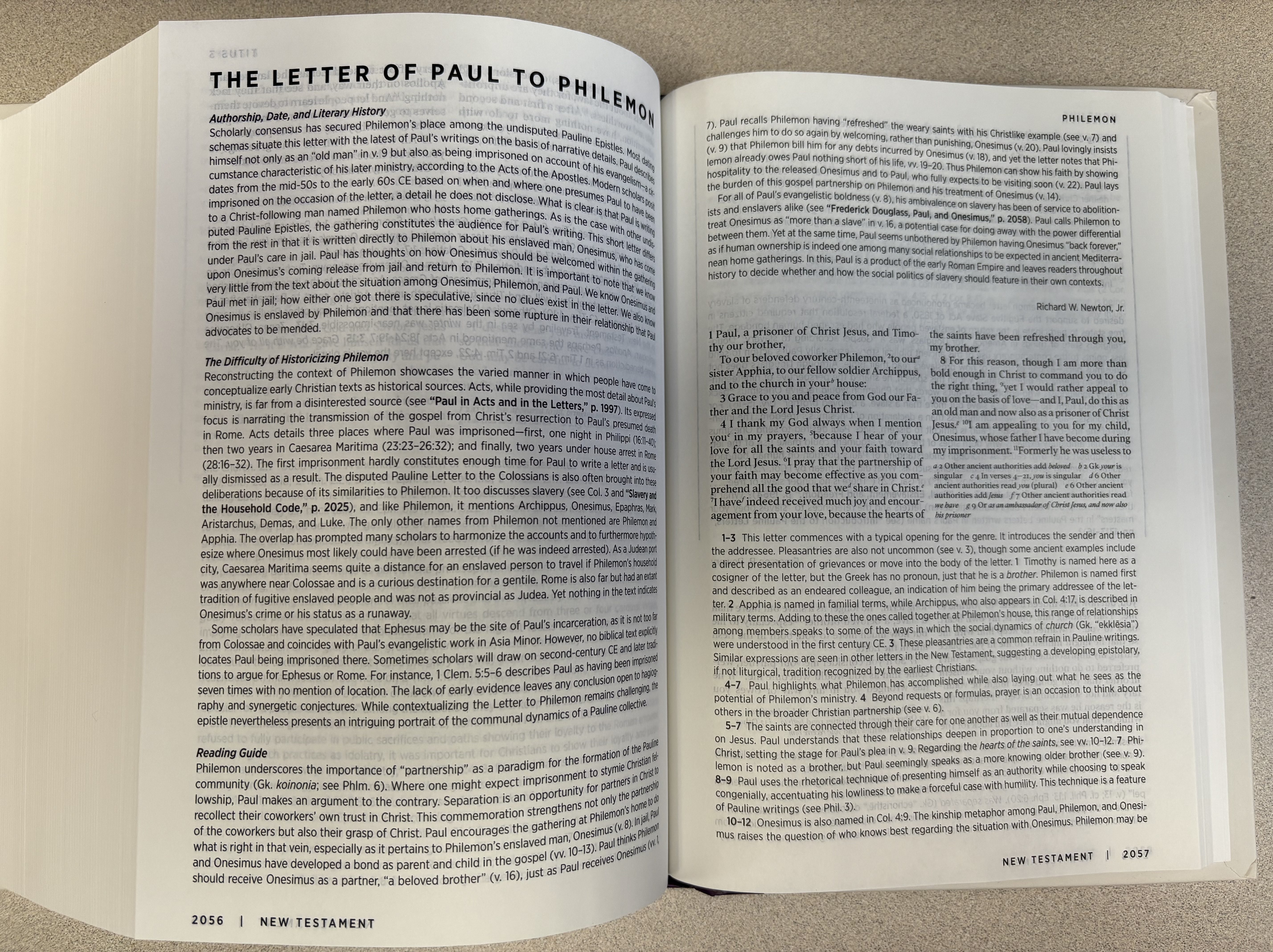
Anyway, let me know if you check it out. One of the chapters in my forthcoming book expands on my essay about, what I call, “the African American Bible,” and includes a lot of my work on the legacy of Philemon and how people work scriptures. For now, you can find my work and a bunch of fantastic essay by fantastic colleagues in the WJK NRSV-UE Study Bible here.
Discover more from Sowing the Seed
Subscribe to get the latest posts sent to your email.
